Political Settlements and Revenue Bargains in Africa
We know little of how citizens respond to increased taxation. Do they protest, do they demand services in return for the tax, or do they accept increased tax burdens?
This research programme has studied a series of micro-level revenue bargaining processes. On this basis, our research has widened/deepened our theoretical and empirical knowledge about revenue bargaining processes in lowincome countries with a view to identifying both what triggered the bargaining processes, how the processes evolved and whether they resulted in a sort of contract or agreement between the parties. Theoretically, we have developed and applied a framework inspired by fiscal sociology, which has focused the role of revenue mobilization in state-building processes, combined with political settlement theory, which has a more explicit and applicable focus on relations of power.
Motivation for research

‘In some historical periods, the immediate formative influence of the fiscal needs and policy of the state on the development of the economy and with it on all forms of life and all aspects of culture explains practically all the major features of events; in most periods it explains a great deal and there are but a few periods when it explains nothing.’ (Joseph Schumpeter, 1918)
Schumpeter’s point made almost a century ago, that the revenue base and policies of the state are closely connected has inspired a generation of scholars exploring the relationship between revenue collection and the nature of the state. The ‘new fiscal sociology’ as represented by Michael Mann, Charles Tilly, and Margaret Levi, among others, all in their different ways explore the dynamics of European state-making. They point to how taxation to finance war provided an incentive to bargain with tax payers to reach a fiscal contract that ensured compliance. Rentier state theories in many ways offer a mirror image of the fiscal contract theory: if revenue comes from extractive natural resources or aid, states will not have an incentive to enter into a fiscal contract with their citizens. As a consequence, there will not be what Mick Moore has called a ‘governance dividend’ of taxation.
There is a growing body of literature on how these patterns of state-building apply to low-income countries. First of all, interstate war is not present in the way it was when European states were in the making. This means that rulers do not have the same incentives to maximise revenues. Secondly, democracy, or its minimal version of regular competitive elections, is often introduced prior to the construction of well-established tax systems which gives bargaining about revenue a different character. On the basis of a case study of Zambia, for example, Lise Rakner and Odd-Helge Fjeldstad have shown that elections may serve to politicise the revenues from natural resources in a way so that they become part of a bargaining process between states and citizens. Hence, even if citizens do not pay tax, they may take part in the bargaining for revenue. Often, the causal processes identified in new fiscal sociology do not follow the patterns identified in low-income countries. The fiscal contract may be turned on its head, so to speak.
Will Prichard has examined the conditions under which tax bargains occur. He identifies cases in sub-Saharan Africa where taxation leads to greater accountability. However, we still do not know much about the micro-foundations of revenue bargaining. We know little about the returns that materialise from the bargaining, and we know little about how revenue providers, actual or potential, affect government policy. Through a series of studies of instances of revenue bargaining, this project seeks to add to our theoretical and empirical knowledge about revenue bargaining processes in low-income countries with a particular focus on the returns: the decisions or non-decisions of powerholders.
Our conceptualisation of revenue bargaining hones in on political dynamics whereby the interests and power of members of government and of different revenue providers take center stage. A political settlement approach that conceptualises political dynamics fitting both democratic and non-democratic settings and that can include bargaining over both collective (public) and narrow goods (e.g. patronage). The political settlement approach helps us identify powerful organisations in society and their interactions with each other. Using a framework combining political settlement and fiscal contract theory, our research programme aims to offer a series of political economy analyses of specific bargains.
More about the project
More about the project
Over the last decade, a number of governments in Sub-Saharan Africa have become less dependent on aid from their traditional partners. They increasingly rely on other revenue sources such as VAT and income taxes, income from natural resources, and financial loans from non-traditional donors such as China or from the international private capital market.
At the same time, the policy priorities of these countries’ governments appear to be changing as they become less dependent and reclaim ownership. Whereas poverty reduction and social service provision were highly prioritised around the turn of the Millennium, focus now appears to have shifted towards infrastructure, power supply, and industrial policy.
Declining aid dependence and more country ownership over policy are clearly desirable. However, we know little about how the changes in the composition of revenue providers affect bargaining over revenue and ultimately public policy. Revenue bargaining processes are inherently political. They are affected by the countries’ political settlements and electoral pressures.
This proposed research programme explores how formal and informal revenue bargains affect public policies. We offer a contextual political settlement analysis in order to better understand the politically mediated influence of the main revenue providers.
We do this by combining a macro-historical comparative study of Uganda and Tanzania over time with a micro-level study of specific instances of revenue bargaining. Uganda and Tanzania are typical examples of the changing composition of revenue providers that African governments experience and yet, despite many similarities, their political settlements differ substantially in terms of the number of and degree of conflicts between powerful factions. Therefore, they make for good cases of comparison.
A working paper exists and can be requested from Anne Mette Kjær at mkjaer@ps.au.dk
Activities
Activities
PSRB workshops
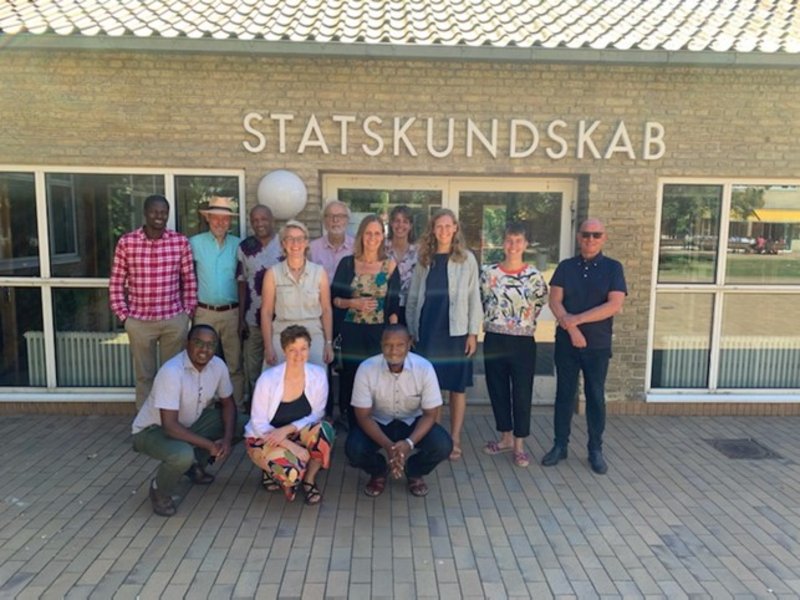
PSRB Workshop, Aarhus, August 2022
PSRB Workshop, Aarhus, August 2022
August 10-12 2022
The purpose of the workshop was to present and discuss paper drafts, discuss ongoing projects and paper still to be produced as well as to discuss publication and dissemination plans.
Workshop at the section for comparative politics, Department of Political Science, Aarhus University, October 2020
Workshop at the section for comparative politics, Department of Political Science, Aarhus University, October 2020
Kjær, A. M, Bak, A. K., and Ulriksen, M. S. ‘When state and revenue providers negotiate: Theorising triggers, processes and outcomes of revenue bargains’.
PSRB Workshop, Aarhus, June 2020 (COVID-cancelled). Replaced with online webinars
PSRB Workshop, Aarhus, June 2020 (COVID-cancelled). Replaced with online webinars
The PSRB workshop in june 2020 was cancelled due to COVID-19. The workshop was replaced by several online webinars:
Friday October 23rd, 2020
Anne Mette Kjær, Marianne S. Ulriksen and Ane Karoline Bak presents the concluding chapter of the OUP book ‘Politics of Revenue Bargaining’.
Tuesday, Nov 17, 2020
Ane Karoline Bak presents her chapter contribution to the OUP book ‘Brokered fiscal contracts?’
Tuesday Dec 8th, 2020
Moses Khisa, Jamal Msami, and Ole Therkildsen presents their working paper on campaign financing.
Oscar Kamusiime presents his working paper based on his PhD thesis.
Monday May 4th , 2021
Constantine George presents his working paper based on his PhD thesis.
August 2021
Dr. David Bakibinga, Anne Mette Kjær and Oscar Kamusiime participate in Oscars first doctoral Committee meeting
PSRB Workshop, Arusha, January 2019
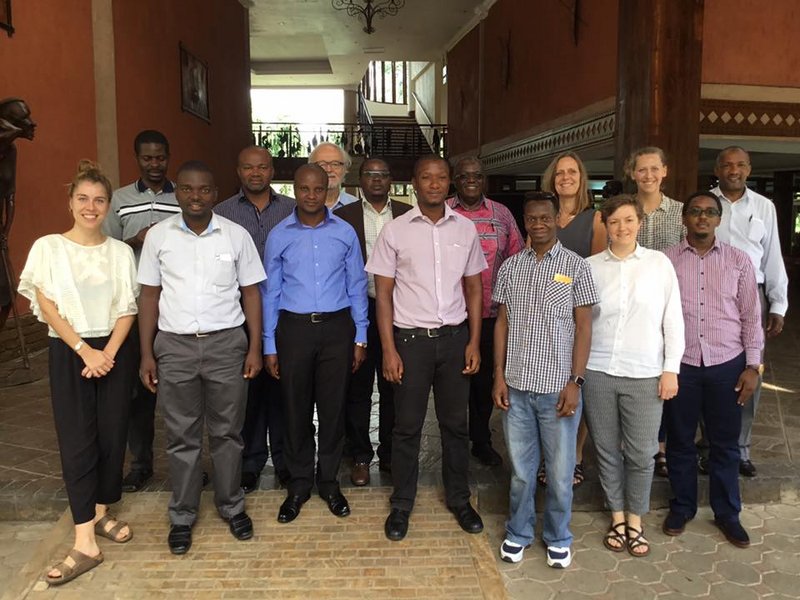
PSRB Workshop, Arusha, January 2019
7-9 January 2019
The purpose of the workshop was to present paper drafts and to discuss future projects.
PSRB Workshop, Bagamoyo, August 2017
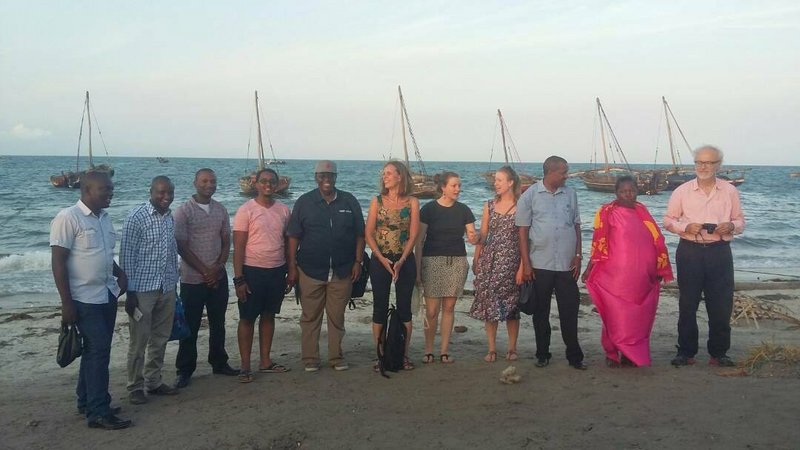
PSRB Workshop, Bagamoyo, August 2017
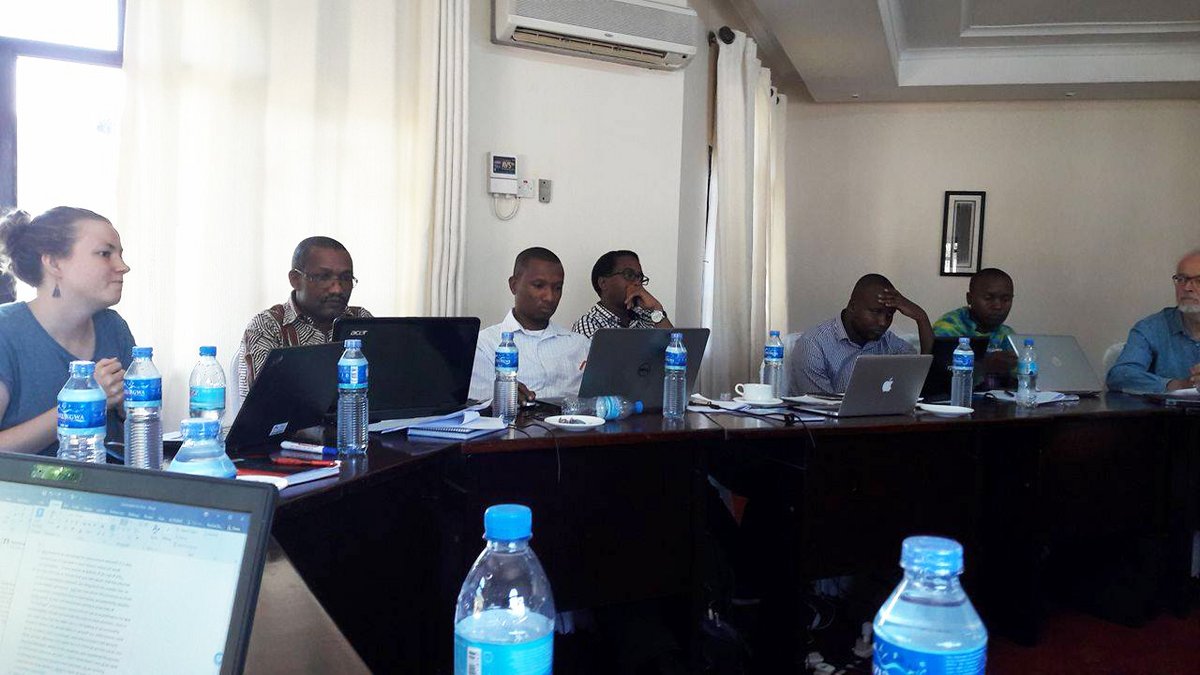
21-26 August 2017
The purpose of the workshop is to present and discuss full paper drafts, to comment and discuss the papers, to revise and write more, and finally to develop the projects further.
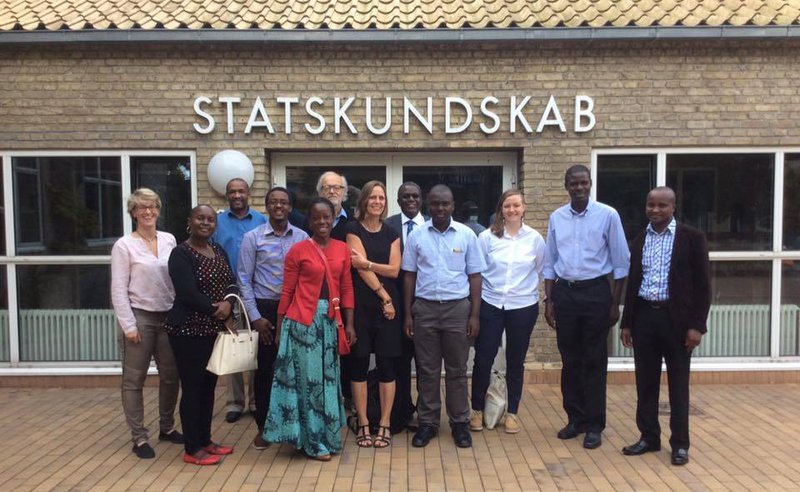
The Department of Political Sciences Annual departmental seminar for alumni. Aarhus University, August 2017
The Department of Political Sciences Annual departmental seminar for alumni. Aarhus University, August 2017
Participants from the PSRB project:
- Kjær, A. M. ‘Stater og skatter i de fattigste lande’.
PSRB Workshop, Entebbe, January 2017
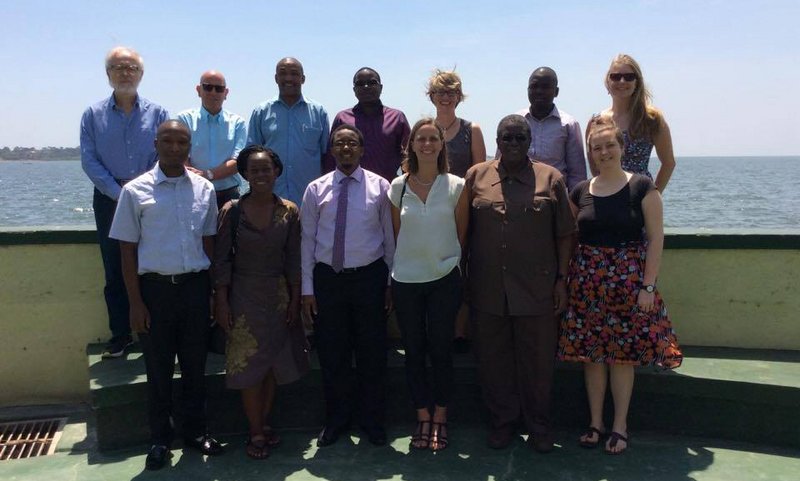
PSRB Workshop, Entebbe, January 2017
25-27 January 2017
The purpose of the workshop is to present work in progress, to develop and discuss our common approach and framework, and to discuss methodologies and future steps.
PSRB Project Launch Workshop, Aarhus, August 2016
PSRB Project Launch Workshop, Aarhus, August 2016
22-26 August 2016
The purpose of the workshop was to get the research going, to discuss the collaborative research, and to present and develop ideas together. The main goal was to find a common platform that we can all contribute to.
Teaching
BA seminar, 'Hvordan betales regningen? Statsfinansiering i udviklingslande', 2022
BA seminar, 'Hvordan betales regningen? Statsfinansiering i udviklingslande', 2022
Fall 2022
BA seminar, Department of Political Science, Aarhus University.
Lecturer: Matilde Jeppesen.
Link: MJ, BA 2022
MA seminar, 'How to finance a state? Revenue mobilisation and reforms in developing countries', 2022
MA seminar, 'How to finance a state? Revenue mobilisation and reforms in developing countries', 2022
Summer 2022
BA seminar, Department of Political Science, Aarhus University.
Lecturer: Matilde Jeppesen.
Link: MJ, MA 2022
MA seminar, 'Hvordan finansierer man en stat? Skattemobilisering og reformer i udviklingslande', 2021
MA seminar, 'Hvordan finansierer man en stat? Skattemobilisering og reformer i udviklingslande', 2021
Summer 2021
BA seminar, Department of Political Science, Aarhus University.
Lecturer: Matilde Jeppesen.
Link: MJ, MA 2021
BA seminar, 'Politik, institutioner og udvikling', 2021
BA seminar, 'Politik, institutioner og udvikling', 2021
Spring 2021
BA seminar, Department of Political Science, Aarhus University.
Lecturer: Anne Mette Kjær.
Link: AMK, BA 2021
BA seminar, 'Stater, skatter og udvikling i det globale syd', 2020
BA seminar, 'Stater, skatter og udvikling i det globale syd', 2020
Spring 2020
BA seminar, Department of Political Science, Aarhus University.
Lecturer: Anne Mette Kjær and Ane Karoline Bak
Link: AMK and AKB, BA 2020
BA seminar, 'Stater, skatter og udvikling', 2018
BA seminar, 'Stater, skatter og udvikling', 2018
Spring 2018
BA seminar, Department of Political Science, Aarhus University.
Lecturer: Anne Mette Kjær
Link: AMK, BA 2018
MA seminar, 'Revenue sources in developing countries: Implications for state and society', 2017
MA seminar, 'Revenue sources in developing countries: Implications for state and society', 2017
Fall 2017
BA seminar, Department of Political Science, Aarhus University.
Lecturer: Rachel Beach
Link: RB, MA 2017
MA seminar, 'A Governance Dividend of Taxation? Effects of revenue sources in developing countries', 2017
MA seminar, 'A Governance Dividend of Taxation? Effects of revenue sources in developing countries', 2017
Spring 2017
BA seminar, Department of Political Science, Aarhus University.
Lecturer: Ane Karoline Bak
Link: AKB, MA 2017
MA seminar, 'Finansiering af udvikling I Afrika: et globalt ansvar', 2016
MA seminar, 'Finansiering af udvikling I Afrika: et globalt ansvar', 2016
Fall 2016
BA seminar, Department of Political Science, Aarhus University.
Lecturer: Marianne Ulriksen
Link: MU, MA 2016
MA seminar, 'Revenue sources in developing countries: Implications for state and society', 2016
MA seminar, 'Revenue sources in developing countries: Implications for state and society', 2016
Spring 2016
BA seminar, Department of Political Science, Aarhus University.
Lecturer: Anne Mette Kjær and Rachel Beach
Link: AMK and RB, KA 2016
Conference participation
African Studies Association 65th Annual meeting, Philadelphia, November 2022
African Studies Association 65th Annual meeting, Philadelphia, November 2022
17-19 November 2022
Panel: Taxation in Africa pt. I: Why do(n’t) people pay taxes?
Chair:
Ane Karoline Bak, University of Southern Denmark.
Participants:
Wilson Prichard, University of Toronto / ICTD. 'Rethinking tax morale: What is it? How to measure it? Why is it important?'.
Ane Edslev, Aarhus University. 'Meaning Matters – Exploring popular notions and experiences of taxation in the urban informal economy of Tanzania'.
Vanessa van den Boogaard, University of Toronto. 'Informal revenue generation and the state in Sierra Leone'.
Discussants:
Anne Mette Kjær, Aarhus University.
Adrienne LeBas, American University.
Panel: Taxation in Africa pt. II: Politics of taxation and tax reforms
Chair:
Matilde Jeppesen, Aarhus University.
Participants:
Anne Mette Kjær, Aarhus University and Ane Karoline Bak, University of Southern Denmark. 'Politics of Revenue Bargaining in Africa'.
Kyle McNabb and Hazel Granger, ODI. 'Employment Income Tax in Africa: Findings from a New Dataset'.
Matilde Jeppesen, Aarhus University. 'The Reality of Semi-Autonomy: Zambia Revenue Authority'.
Gayatri Sahgal, University of Oxford. 'Monopolists or Maverisk: Tax Relations of Big Business in Fragile Contexts'.
Discussants:
Catherine Boone, London School of Economics.
Lise Rakner, University of Bergen
Panel: Taxation in Africa pt. III: International taxation and tax justice
Chair:
Anne Mette Kjær, Aarhus University
Participants:
Simon Rakei, University of Cape Town. 'Contradictions in the South Africa-Democratic Republic of Congo Double Tax Treaty and the United Nations'.
Chenai Mukumba, Tax Justice Network Africa. 'The Politics of African Country Participation in the OECD IF on BEPS'.
Dan Ngabirano, School of Law Makerere University. 'Politics, Revenue Bargaining and Uganda’s Petroleum Sector Regulation and Taxation Legislation'
Discussant:
Daniel Mulé, OXFAM America.
Link: ASA 2022
Danish Political Science Associations 54th Annual Meeting, Nyborg, October 2022
Danish Political Science Associations 54th Annual Meeting, Nyborg, October 2022
Panel: State-society Relationships and mobilization
27-28 October 2021
Chair:
Matilde Jeppesen, Aarhus University.
Participants:
Mai Van Tran, University of Copenhagen. 'Provoking Civilian Distrust And Disruption Towards Popular Protests: The Role Of Counter-Mobilisation Strategies By Myanmar Military'.
Matilde Jeppesen, Aarhus University. 'Can you tell the difference? The formal autonomy of SARAs'.
Anne Kirstine Rønn, Aarhus University. 'Why do protest movements in Lebanon and Bosnia use different frames to challenge ethno-sectarian politics?'.
Casper Sakstrup and Henrikas Bartusevičius, Aalborg University. 'Group-based injustice motivates, whereas group-based inequality dissuades, political violence'.
Link: DPSA 2021
TaxCapDev Conference 'Power and Politics – Perspectives on Taxation and State Building in Africa', Bergen, September 2021
TaxCapDev Conference 'Power and Politics – Perspectives on Taxation and State Building in Africa', Bergen, September 2021
1-2 September 2021
Panel: Fiscal capacity, reciprocity and the social contract.
Chair:
Lise Rakner, University of Bergen and CMI
Participants:
Kunal Sen, UNU-WIDER. 'The political drivers of fiscal states: Evidence from the longue durée'
Sansia Blackmore, African Training Institute. 'Revisiting sources of development disparities: Social contracts, state capacity and societal norms'.
Anna Persson, University of Gothenburg. 'The power of ideational reach: A new perspective on state capacity'.
Anne Mette Kjær, Aarhus University. 'Service Provision or tax exemptions: Revenue bargaining in Uganda’s agricultural sector'.
Panel: Taxation, institutions and participation
Chair:
Vincent Somville, CMI.
Participants:
Ane Karoline Bak, University of Southern Denmark. 'Taxation in Senegal: Notes on language and power'.
Jamal Msami, REPOA. 'The politics of taxing faith-based service providers in Tanzania'.
Ane E. Jacobsen, aarhus University. 'Taxation in the informal economy: towards a meaning-oriented conceptualization'.
Matilde Jeppesen, Aarhus University. 'Does autonomy matter? Exploring the impact of Zambia Revenue Authority’s semi-autonomous status'.
Ivana Haakens, The Norwegian Tax Administration. 'Trust in the Norweigian Tax Administration'.
Link: TaxCapDev 2021
African Studies Association 64th Annual meeting, Virtual Meeting, November 2021
African Studies Association 64th Annual meeting, Virtual Meeting, November 2021
Panel: (Re)conceptions and (Re)consideration of the Dynamics of Taxation
16-20 November 2021
Chair:
Ane Karoline Bak, University of Southern Denmark.
Participants:
Ane Karoline Bak, University of Southern Denmark and Vanessa van den Boogaard, University of Toronto. 'A tax by any other name? Conceptions of taxation and implications for research'.
Matilde Jeppesen, Aarhus University. 'The reality of semi-autonomy: the Zambia Revenue Authority.'
Laura Channing, London School of Economics. 'Labour taxes in the Sierra Leone Protectorate: calculating the costs of reform'.
Colette Nyirakamana, McMaster University. 'The Institutional and Political Dynamics Affecting Revenue Mobilization in the Cities of Accra and Nairobi'.
Discussant:
Catherine Boone, The London School of Economics
Link: ASA 2021
Danish Political Science Associations 53rd Annual Meeting, Vejle, October 2021
Danish Political Science Associations 53rd Annual Meeting, Vejle, October 2021
28-29 October 2021.
Anne Mette Kjær (not present), Marianne S. Ulriksen, University of Souther Denmark, Ane Karoline Bak University of Southern Denmark. 'When states negotiate revenue: Responsive governments and revenue foregone’.
Link: DPSA 2021
NoPSA, Virtual meeting, August 2021
NoPSA, Virtual meeting, August 2021
Workshop: Taxation and state-society relations in a comparative perspective
10 – 13 August 2021
Chairs:
Johanna Söderström, Uppsala University.
Anne Mette Kjær, University of Aarhus.
Anna Persson, University of Gothenburg.
Lise Rakner, University of Bergen .
Participants:
Anne Mette Kjær, University of Aarhus., Marianne S. Ulriksen, University of Southern Denmark, and Ane Karoline Bak, University of Southern Denmark. 'Politics of Revenue Bargaining in Afirca: Glimpses of state-society reciprocity (conclusing chapter)'.
Rasmus Broms, University of Gothenburg. 'Boxholm tea party: Taxation and voter turnout in a mature democracy'.
Camille Pellerin and Johanna Söderström, Uppsala University. 'Render unto Caesar the things that are Caesar’s and unto God the things that are God’s’? Making Sense of Tax Non-Compliance in Ethiopia'.
Ane Karoline Bak, University of Southern Denmark. 'Understanding the contextualised role of taxation in state-society accountability relations in Senegal'.
Anna Persson and Elise Tengs, University of Gothenburg. 'Who Pays for Distributive Politics? Reassessing the Patronage State in Sub-Saharan Africa'.
Johanna Söderström, Uppsala University, and Lise Rakner, University of Bergen. 'Imagining Solidarity around Taxation in Namibia – Generalized or Personal, Calculative or Affective?'
Samuel Sharp, Stephanie Sweet and Alina Rocha Menocal, ODI. 'Civil Society Engagement in Tax Reform: Appetite, Capacity, and Influence'.
Jessica Gottlieb, Texas A&M University, Adrienne LeBas, American University, and Janica Magat, Texas A&M University. 'Can Social Intermediaries Build the State? Evidence from an Experiment in Lagos, Nigeria'.
Link: NOPSA 2021
UNU-WIDER Workshop, Virtual, June 2021
UNU-WIDER Workshop, Virtual, June 2021
Workshop: ‘Fiscal states – the Origins and Development implications’
15-22 June 2021
Virtual meeting.
Matilde Jeppese, Aarhus University, Anne Mette Kjær, Aarhus Uniervsity and Ane Karolien Bak, University of Southern Denmark, 'Fiscal states in sub-Saharan Africa: Conceptualization and empirical trends'.
Link: UNU-WIDER 2021
Tax For Development Webinar Series, Virtual, June 2021
Tax For Development Webinar Series, Virtual, June 2021
1 June 2021
Online presentation at the Tax For Development Webinar Series, organised by CMI and the TaxCapDev-Network.
Anne Mette Kjær, ‘When ‘Pockets of effectiveness’ matter politically: Extractive industry regulation and taxation in Uganda and Tanzania’.
University of Southern Denmark Workshop, Odense, May 2021
University of Southern Denmark Workshop, Odense, May 2021
Workshop: DaWS Early Career Workshop
May 2021.
Ane Karoline Bak, University of Southern Denmark. Understanding the contextualised role of taxation in state-society accountability relations in Senegal.
Centre for African Economics Annual Meeting, Roskilde University, December 2019.
Centre for African Economics Annual Meeting, Roskilde University, December 2019.
2-3 December 2019.
Anne Mette Kjær and Ane Karoline Bak presented the theoretical framework and selected findings from the PSRB research project.
Science Po and CERI joint seminar, Paris, December 2019
Science Po and CERI joint seminar, Paris, December 2019
Seminar: The Social Contract and the Welfare State in Comparative Perspective
16-17 December 2019.
Marianne S. Ulriksen, University of Southern Denmark.Communitarian versus Individual Norms: Do conflicting norms threaten the sustainability of social protection programmes in Africa?.
Link: CERI Seminar 2019
German Development Institute (DIE) Workshop, Bonn, December 2019
German Development Institute (DIE) Workshop, Bonn, December 2019
Workshop: ’Social protection for social cohesion’
4-5 December, 2019.
Marianne S. Ulriksen, University of Southern Denmark. ‘Whose responsibility: Mine, yours or ours? How cultural-specific norms shape the potential social cohesion outcomes of social protection'.
Link: DIE 2019
African Studies Association 63rd Annual Meeting, Virtual Meeting, November 2020
African Studies Association 63rd Annual Meeting, Virtual Meeting, November 2020
Panel: Colonial and Contemporary Dynamics of Taxation in Africa
19-21 November 2020
Chair:
Ane Karoline Bak, Aarhus University
Participants:
Vanessa van den Boogaard, International Centre for Tax and Development and University of Toronto. 'Hybrid outcomes of formal and informal taxation: Informal revenue generation as patrimonial resource distribution in Sierra Leone'.
Laura Channing, University of Cambridge. 'Internal Inequalities: Taxpayers, Taxation and Expenditure in a Composite Colonial State'.
Matilde Jeppesen, Aarhus University. 'Facilitating the Fiscal Contract? The Case of Semi-Autonomous Revenue Authorities in Sub-Saharan Africa'.
Ane Karoline Bak, Aarhus University. 'A brokered or broken fiscal contract in Senegal?'.
Discussant:
Cathrine Boone, The London School of Economics and Political Science
Link: ASA 2020
African Studies Association 62nd Annual Meeting, Boston, November 2019
African Studies Association 62nd Annual Meeting, Boston, November 2019
Panel: The Politics of Revenue Bargaining
21-23 November 2019
Chair:
Anne Mette Kjær, Aarhus University
Ane Karoline Bak, Aarhus University
Participants:
Dan Ngabirano, Makerere University. 'Bargaining processes in petroleum legislation in Uganda'.
Lise Rakner, University of Bergen, and Odd-Helge Fjeldstad, CMI Bergen. 'Tax bargains in poorly regulated countries: Lobbying and the shaping of tax policies in Tanzania'.
Moses Khisa, North Carolina State University. 'Campaign Financing and the Politics of Revenue Bargaining in Uganda and Tanzania'.
Ane Karoline Bak, Aarhus University. 'Brokering the fiscal contract: Revenue bargaining in Senegal's informal sector'
Discussant:
Nicolas van de Walle, Cornell University.
Ole Therkildsen, Danish Institute for International Studies (DIIS).
Panel: Agrarian Politics
Chair:
Bettina Engels, Freie Universität Berlin
Participants:
Anne Mette Kjaer, Aarhus University. 'States and farmers bargaining power: bargaining over agricultural policies in Uganda'.
Bettina Engels, Freie Universität Berlin Planting. 'Agrarian class mobilization in Burkina Faso’s cotton production'.
Howard Stein, University of Michigan and Rie Odgaard, Danish Institute of International Studies. 'New Seeds of Belonging: The Role of the World Bank and Property Rights Formalization in Rural Tanzania'.
Jeanne Koopman, Boston University. 'Peasant Philanthropists: Getting Irrigated Land to the Landless in Senegal'.
Link: ASA 2019
ESID Conference, Manchester, September 2019
ESID Conference, Manchester, September 2019
Panel: Tax and the Social Contract
9-11 September 2019
Participants:
Per Andersson, European University Institute. 'Fiscal capacity in nondemocratic states'.
Ane Karoline Bak, Aarhus University. 'Sorting out the confusion: Conceptualising fiscal contracts'.
Anne Mette Kjær, Aarhus University and Marianne Ulriksen, University of Southern Denmark. "The politics of Revenue Bargaining: Triggers, processes and outcomes"
Link: ESID 2019
African Studies Association 61st Annual Meeting, Atlanta, November/December 2018
African Studies Association 61st Annual Meeting, Atlanta, November/December 2018
Panel: Striving for Accountability in Governance
29 November - 1 December 2018
Chair:
Michael Wahman, Michigan State University
Participants:
Eunice Sahle, University of North Carolina (UNC) at Chapel Hill. 'New Spaces of Human Rights in Post-2010 Kenya and the Right to Health in Makueni County'.
Ane Karoline Foged, University of Aarhus. 'Conceptualising the Fiscal Contract'.
Sarah Lockwood, Harvard University. 'Accountable to Whom? The Thembelihle Crisis Committee and the Challenge of Participatory Governance in South Africa'.
Paul Thissen, University of California, Berkeley. 'Legacy Institutions and Political Order in Weak States: Evidence from Chad'.
Link: ASA 2018
Danish Political Science Associations 50th Annual Meeting, Vejle, November 2018
Danish Political Science Associations 50th Annual Meeting, Vejle, November 2018
1-2 November 2018.
Ane Karoline Bak, Aarhus University. ‘Approaching a Senegalese puzzle’.
Link: DPSA 2018
International Conference on Global Dynamics of Social Policy, Bremen, October 2018
International Conference on Global Dynamics of Social Policy, Bremen, October 2018
25-26 October 2018
Marianne Ulriksen, University of Southern Denmark. 'External influence and (shifting) elite commitment to social protection in Tanzania'.
Link: Global Dynamics
ECPR General Conference, Hamburg, August 2018
ECPR General Conference, Hamburg, August 2018
Panel: Taxation in Developing Countries
22-24 Aug 2018.
Chair:
Christian von Haldenwang,German Institute of Development and Sustainability.
Participants:
Roel Dom, University of Nottingham. 'Taxation and Accountability in Sub-Saharan Africa'.
Lina Schwarz, University of Bamberg. 'The Impact of Consumption Taxes on Progressive Spending in Countries of the Global South'.
Paula Zuluaga, Consejo Superior de Investigaciones Científicas. 'Trajectories of Local State Building in Colombia: The State, Property Taxation, and Landed Elites'.
Jamal Msami, REPOA and Marianne S. Ulriksen, University of Southern Denmark. 'A Spate of Tax Reform in Tanzania'.
Discussiant:
Paula Zuluaga, Consejo Superior de Investigaciones Científicas.
Link: ECPR GC 2018
IPSA XXV World Congress, Brisbane, July 2018
IPSA XXV World Congress, Brisbane, July 2018
21-27 July 2018.
Anne Mette Kjær. Aarhus University. ‘Farmers’ bargaining for Agricultural policies and taxation’.
Link: IPSA 2018
ECPR Joint Sessions of Workshops, Nicosia, April 2018
ECPR Joint Sessions of Workshops, Nicosia, April 2018
Workshop: The politics of Revenue Barganing
10-14 April 2018
Chair:
Anne Mette Kjær, Aarhus University.
Lise Rakner, University of Bergen.
Participants:
Marcus Walsh-Führing, Johns Hopkins University. 'Taxation beyond Representation: The Role of the Brazilian State in a Multilevel Governance Structure'.
Armin von Schiller, German Institute of Development and Sustainability. 'The Effect of Political Alignment on Revenue Bargaining and Performance in Mozambican Municipalities'.
Christian von Haldenwang, German Institute of Development and Sustainability. 'Pathways to International Tax Governance'.
Anna Persson, University of Gothenburg. 'Taxation as Patronage Politics? The Impact of Ruling Elites' Ethnicity on Tax Demands and Tax Compliance in Sub-Saharan Africa'.
Anne Mette Kjær, Aarhus University. 'Bargaining Power and Agricultural Policy'.
Odd Helge Fjeldstad, Chr. Michelsen Institute and Lise Rakner, Universitetet i Bergen. 'Tax Bargains in Poorly Regulated Natural Resource Rich Countries: Lobbying, Corruption and the Shaping of Petrol- and Tax Policies in Tanzania'
Rachel Beach, Aarhus Universitet. 'A Twist on 'Trade Taxes' in the Rural Space'.
Ane Karoline Bak, Aarhus Universitet. 'Exploring the Conditions of Broad Revenue Bargains - The Case of Senegal'.
Link: ECPR 201
African Studies Association 60th Annual Meeting, Chicago, November 2017
African Studies Association 60th Annual Meeting, Chicago, November 2017
Panel: Changing revenue bargaining dynamics in Sub-Saharan Africa
16-18 November 2017
Chair:
Anne Mette Kjær, Aarhus University
Participants:
Marianne Ulriksen, University of Southern Denmark and Lucas Katera, Policy Research for Development, REPOA. 'A Spate of Tax Reform in Tanzania: Testing the Political Settlement Theory'
Lucas Katera, Policy Research for Development, REPOA and Anne Mette Kjær, Aarhus University. 'Changing Dynamics of Local Revenue Bargaining'
Lise Rakner, University of Bergen and Odd-Helge Fjeldstad, Chr. Michelsen Institute (CMI). 'Tax Bargains in Poorly Regulated Natural Resource Rich Countries: Comparing Lobbying Games by Domestic and Foreign Companies in Tanzania'
Rachel Beach, Aarhus University. 'Taking the revenue actor’s perspective – strategies of revenue bargaining’.
Discussant:
Ole Therkildsen, Danish Institute for International Studies (DIIS)
Link: ASA 2017
Unlike Twins?! Comparing Autocracies and Democracies. German Political Science Association, Tubingen, March 2017
Unlike Twins?! Comparing Autocracies and Democracies. German Political Science Association, Tubingen, March 2017
Panel: State spending and taxation in democracies and autocracies: comparing Patterns of resource management.
15-16 March 2017
Chair:
Thomas Richter and Christian von Soest, German Institute of Global Area Studies
Participants:
Christian von Haldenwang, German Development Institute. 'What Impact Does Political Regime Durability Have on Public Revenue Collection?'
Ane Karoline Bak, Aarhus University. 'Taxation, Revenue Bargains and the Effect on Accountability Institutions in Developing Countries'
Anne Mette Kjær and Marianne Ulriksen, Aarhus University. 'The Unexplored Side of Fiscal Contract Theory: Revenue Bargains and Public Policy Provisions in Africa'
Thomas Richter, German Institute of Global and Area Studies. 'Taxation and the Formation of Political Institutions: An Explorative Analysis'
Rachel Beach, Aarhus University. 'Benin & Togo: the Unlike Twins of Revenue Mobilization in West Africa'
Christian von Haldenwang, German Development Institute. 'Does the political resource curse affect public finance? The vulnerability of tax revenue in resource-rich countries'
Solveig Richter, University of Erfurt. 'Competing for Power and Money. State Capture and Limited Political Competition in Transition Countries'
Link: Unlike twins 2017
Danish Political Science Associations 48th annual meeting, Vejle, October 2016
Danish Political Science Associations 48th annual meeting, Vejle, October 2016
27-28 October 2016.
Ane Karoline Bak, Aarhus University. ‘What determines agricultural tax effort and how? The case of Rwanda’.
Link: DPSA 2016
Publications and working papers
Publications and working papers
Book: Politics of Revenue Bargaining in Africa
Book: Politics of Revenue Bargaining in Africa
Politics of Revenue Bargaining in Africa (forthcoming). Oxford University Press.
Overview of book chapters
Chapter 1: Politicisation of taxation and state-society reciprocity in Africa. Anne Mette Kjær (Aarhus University), Marianne S. Ulriksen (University of Southern Denmark) and Ane Karoline Bak (University of Southern Denmark)
Chapter 2: Unpacking revenue bargaining: Triggers, processes, and outcomes. Anne Mette Kjær (Aarhus University), Marianne S. Ulriksen (University of Southern Denmark) and Ane Karoline Bak (University of Southern Denmark)
Chapter 3: We pay, we act? Ane Edslev Jacobsen (Aarhus University)
Chapter 4: Same same but different: The effect of political alignment on revenue performance and revenue bargaining in Mozambican municipalities. Armin von Schiller (German Development Institute)
Chapter 5: Bargaining strategies in recent tax reforms in Tanzania. Marianne S. Ulriksen (University of Southern Denmark), Lucas Katera (REPOA, Tanzania) and Jamal Msami (REPOA, Tanzania)
Chapter 6: Revenue bargains in poorly regulated countries: Lobbying and the shaping of tax policies in Tanzania. Odd-Helge Fjeldstad (CMI, African Tax Institute) and Lise Rakner (CMI, University of Bergen)
Chapter 7: Farmer associations and revenue bargaining in Uganda's agricultural sector. Anne Mette Kjær (Aarhus University) and Clayton Arinanye (affiliated researcher, Makerere University)
Chapter 8: The politics of regulation and taxation of Uganda's petroleum sector. Dan Ngabirano (Makerere University)
Chapter 9: Campaign financing and revenue bargaining in Tanzania and Uganda. Moses Khisa (North Caroline State University), Jamal Msami (REPOA, Tanzania) and Ole Therkildsen (DIIS, Denmark)
Chapter 10: A third party at the table: How chiefs and donors influence revenue bargains in Togo. Rachel Beach (PhD, International consultant on tax and development)
Chapter 11: Who should pay? Government and donor bargaining over funding of social protection in Tanzania. Marianne S. Ulriksen (University of Southern Denmark) and Constantine G. Simba (REPOA, Tanzania)
Chapter 12: Brokered fiscal contracts? Ane Karoline Bak (Aarhus University) and Fatou Gueye (Université Cheikh Anta Diop de Dakar)
Chapter 13: Politics of revenue bargaining in Africa: Glimpses of state-society reciprocity. Anne Mette Kjær (Aarhus University), Marianne S. Ulriksen (University of Southern Denmark) and Ane Karoline Bak (Aarhus University)
Publications (articles, policy briefs, etc.)
Publications (articles, policy briefs, etc.)
Khisa, M. (2023). Uganda’s ruling coalition and the 2021 elections: change, continuity and contestation. Journal of Eastern African Studies
Jeppesen, M., Bak, A. K., & Kjær, A. M. (2023). Conceptualizing the fiscal state: implications for sub-Saharan Africa. Journal of Institutional Economics,
van den Boogaard, V., & Beach, R. (2023). Tax and governance in rural areas: The implications of inefficient tax collection. Journal of International Development.
Bak, A. K. and Therkildsen , O. (2022). Democratisation in Tanzania: No elections without tax exemptions. Journal of Eastern African studies
George, C., Msoka, C. T. and Makundi, H. (2022). Formalisation of street vending in Dar es Salaam: Implementation and enforcement of the Wamachinga Identity Card initiative. Forum for Development Studies.
Bak, A. K. and Therkildsen , O. (2022). Democratisation in Tanzania: No elections without tax exemptions. Journal of Eastern African studies
Khisa, M., Msami, J., & Therkildsen, O. (2022). The demand and supply of political campaign financing in Tanzania and Uganda during the 2010s. DIIS Working Paper Number 2022: 10. Copenhagen: Danish Institute for International Studies, DIIS.
Beach, R., and van den Boogaard, V. (2022). Tax and governance in the context of scarce revenues: Implications of inefficient tax collection in rural West Africa. ICTD Working Paper 139. Brighton: International Centre for Tax and Development.
George, C., Myamba, F. and Ulriksen, M. S.(2021). Social Protection in Tanzania: Challenges in the shift of financing PSSN from external funding to government. REPOA Brief, PB 5/2021.
Bak, A. K., Jeppesen, M, and Kjær, A. K. (2021). Fiscal states in sub-Saharan Africa: conceptualization and empirical trends. UNU-WIDER Working Paper 182/2021.
George, C. (2021). Formalization of street vending in Dar es Salaam: The implementation and enforcement of the small-scale Entrepreneurs' Identity Card initiative. REPOA Bried, PB 19/2021.
Mwebesa, O. K. (2021). Right to access to justice vs. duty to pay tax: A critique of the constitutionality of the 30% tax deposit. East African Journal of Peace and Human Rights, Vol. 27, No. 3.
Van den Boogaard, V., Prichard, W., Beach, R., and F. Mohiuddin (2021). Enabling tax bargaining: Supporting more meaningful tax transparency and taxpayer engagement in Ghana and Sierra Leone, Development Policy Review.
Webster, N. A., Winckler Andersen, O. & Therkildsen, O., 4 feb. (2021). Ulighed og internationalt udviklingssamarbejde: Ulighed, skatter og afgifter, offentlige serviceydelser og sociale sikkerhedsnet i de fattigste udviklingslande, København: Dansk Institut for Internationale Studier, 11 s. Rammesættende emnepapir – udarbejdet på Udenrigsministeriets foranledning i forbindelse med ny udviklingspolitisk strategi.
George, C. and Olan'g, L. (2020). Taxing the informal sector: A case of Dar es Salaam street vendors. REPOA Brief, PB 6/2020.
Kjær, A. M., Therkildsen, O., Buur, L. and Hansen, M. W. (2020). When 'Pockets of effectivness' matter politically: Extractive industry regulation and taxation in Uganda and Tanzania. The Extractive Industries and Society, 8:1, pp. 294-302.
Prichard, W., Beach, R., Mohiuddin, F., & van den Boogaard, V. (2020). The micro-links between taxation and accountability initiatives. ICTD Working Paper 114. Brighton: International Centre for Tax and Development
Fjeldstad, O-H. & Therkildsen, O., (2020). Implications of the Covid-19 pandemic for revenue generation in poor African countries, Copenhagen: Danish Institute for International Studies, 61 s. (DIIS Working Paper; Nr. 13, 2020).
Therkildsen, O. and Bak, A. K. (2019b): Democratisation in Tanzania: No Elections Without Tax Exemptions. ICTD Working Paper 98. Brighton: Institute of Development Studies.
Therkildsen, O., & Bak, A. K. (2019a). Democratisation in Tanzania: No Elections Without Tax Exemptions. Policy Brief. Number 49. Brighton: ICTD.
Kjær, A. M. (2019). Udviklingsforskningens indflydelse: Betydningen af konsensus og polarisering. Politica, Vol. 51, No.3
PSRB working papers and background papers
PSRB working papers and background papers
Khisa, M., Bakibinga, D. J., and Ngabirano, D. (2023). Recent revenue bargains in Uganda, 2008-2018: Actors, context and trends. PSRB Background Paper.
Msami, J., Katera, L, and Ulriksen, M. S. (2022). Bargaining strategies in recent tax reforms in Tanzania. PSRB Working Paper.
Ngabirano, D. (2022). Whose Prosperity? The politics of Uganda's petroleum sector regulation, taxation and revenue management legislation. PSRB Working Paper.
Ph.D. dissertations and MA theses
Ph.D. dissertations and MA theses
Jeppesen, M. (2022). Semi-Successful? Semi-Autonomous Revenue Authorities in Sub-Saharan Africa. Aarhus: Politica.
George, C. (2022). Formalisation of street vendor's business in Dar es Salaam City, Tanzania. Dar es Salaam: University of Dar es Salaam.
Bak, A. K. (2019). When the fiscal social contract is not about tax. Understanding the limited role of taxation in social accountability in Senegal. Aarhus: Politica.
Beach, R. (2018). The Hunt for Revenues in a Poor State. Aarhus: Politica.
Jacobsen, A. E. (2018). We, the women. MA thesis, Department of Political Science, Aarhus University.
Kamusiime O. M. (2023) A Political Economy of Revenue Reforms in Uganda: Business Interest Groups’ Influence. Ph.D Dissertation, Makerere University
Participants
Participants

Jamal Msami
Head of Tanzania team
Researcher at Repoa

Lucas Katera
Dr PhD
Senior Researcher at Repoa

Dan Ngabirano
Affiliated researcher at School of Law Makerere University
dan.ngabirano@developmentlaw.org

Moses Khisa
Assistant Professor
Affiliated researcher at School of Law Makerere University
moses.khisa@gmail.com

Ane Karoline Bak
Assistant Professor
University of Southern Denmark
akbf@sam.sdu.dk

Matilde Jeppesen
Postdoc
Aarhus BSS, Aarhus University
mj@ps.au.dk

Constantine George
Affiliated PhD student at University of Dar es Salaam
cgeorge@repoa.or.tz

Oscar Kamusiime
Affiliated PhD student at Makerere University
kamuoscar@gmail.com

Marianne Sandvad Ulriksen
Assistant Professor
University of Southern Denmark
mu@sam.sdu.dk

Ole Therkildsen
Emeritus researcher
DIIS Danish Institute for International Studies
oth@diis.dk

Anne Mette Kjær
Principal Investigator
Professor
Aarhus BSS, Aarhus University
mkjaer@ps.au.dk
+45 8716 5245
David Justin Bakibinga
Head of Uganda team
Professor
School of Law Makerere University
dbakibinga@law.mak.ac.ug

Clayton Arinanye
Affiliated researcher
Development Economist
Makerere University
arinanye.clayton@gmail.com

Rachel Beach
Affiliated researcher
Consultant
rachelbeach@gmail.com
Simon Edward
Affiliated PhD student at University of Dar es Salaam
Flora Mayamba
Affiliated researcher at Repoa
myambaf@yahoo.com
Institutions


Contact

The team behind the project